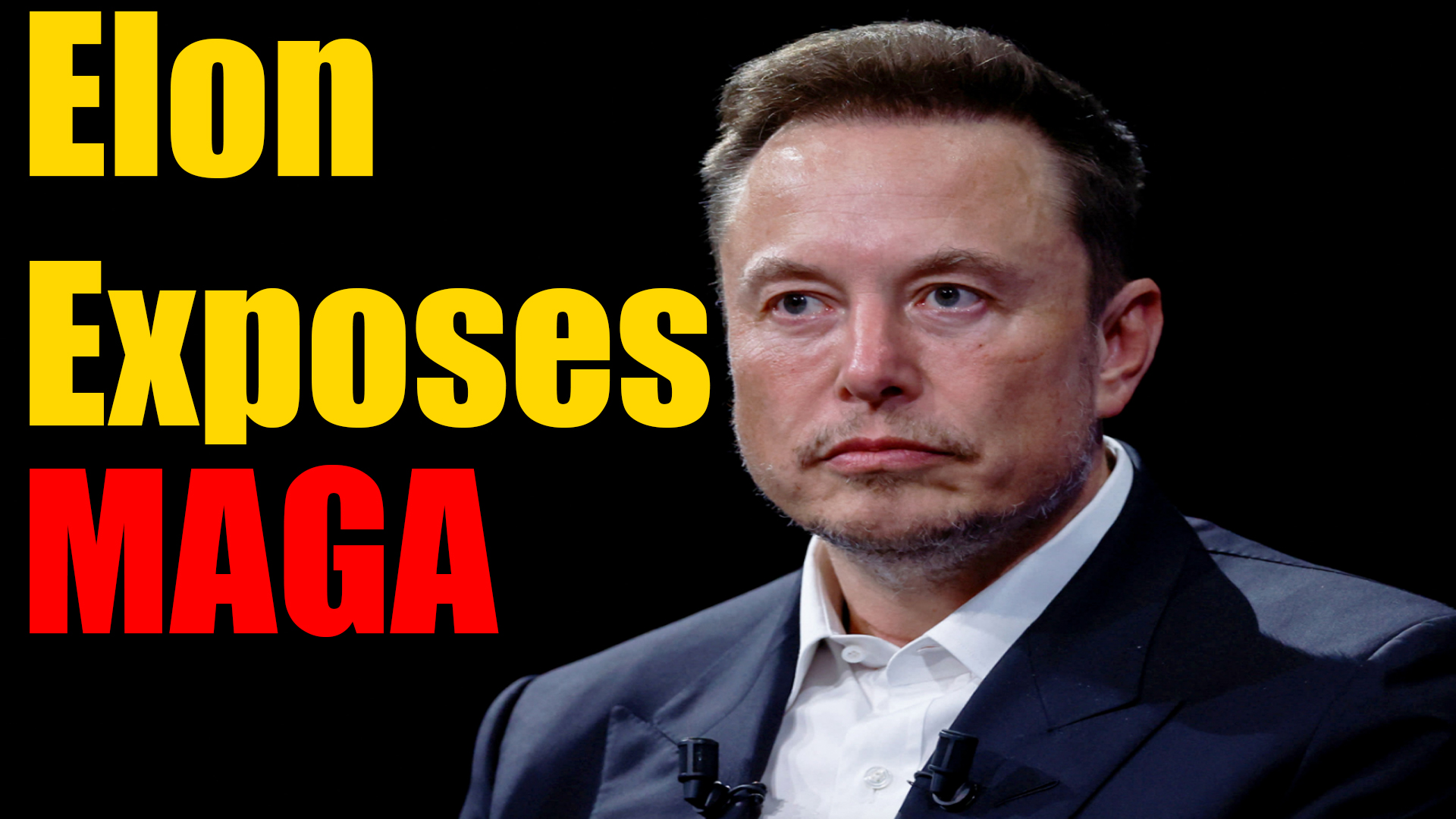
In what may be the most consequential transparency failure in social media history, Elon Musk's X platform accidentally exposed what researchers are calling "one of the largest political catfishing operations in U.S. history." A new feature intended to build trust instead tore the mask off hundreds of prominent "America First" accounts, revealing they were operated not by red blooded patriots, but by foreign actors in Russia, Nigeria, Bangladesh, and Eastern Europe.
The Accidental Revelation
On November 22-23, 2025, X rolled out a seemingly innocuous feature called "About This Account." Designed to combat misinformation, it revealed basic profile information including when accounts were created, how many times they'd changed usernames, and crucially—what country they're based in. Within hours, the feature became a political nuclear bomb.
The revelations came fast and furious. Account after account that had spent years cultivating millions of followers while claiming to represent the "real America" was suddenly exposed as foreign operated. The scale was staggering, and the implications for American political discourse are only beginning to be understood.
The Exposed Network: Case Studies in Deception
Let's examine the worst examples of what this transparency feature uncovered:
The "Patriots" Who Weren't American
- @MAGANationX - Nearly 400,000 followers, bio reading "Standing strong with President Trump 🇺🇸 | America First | Patriot Voice for We The People." Location? Eastern Europe.
- America First account - 67,000 followers, literally named after the nationalist slogan. Based in Bangladesh.
- @1776General_ - Claims in bio to be "Ethnically American." Actually operates from Turkey.
- @IvankaNews_ - 1 million followers posting inflammatory content like "Does the spread of Islam on American soil concern you?" Run from Nigeria.
The Trump Family Fan Machine
Multiple fan accounts dedicated to Trump family members were exposed as foreign operations. An Eastern European account dedicated to Barron Trump. A Macedonian account for Kai Trump news. A Nigerian operation running Ivanka Trump content. These weren't fringe accounts, they had hundreds of thousands of followers combined, shaping narratives about America's most powerful political family from overseas.
"They were foreign trolls, posting from Russia, Nigeria, India, Bangladesh, and Eastern Europe, while pretending to be red blooded patriots defending Donald Trump. And within minutes of rollout, the internet erupted."
The Economics of Digital Deception
Understanding why these operations exist requires examining the economic incentives. X's monetization model created a perfect storm for foreign influence operations. Through engagement based payments, foreign operators discovered they could earn substantial income, substantial by developing world standards by generating outrage and engagement among American users.
The Profit Model:
A Nigerian creator can earn $800 per month through X engagement, equivalent to a well paid job in Nigeria. A Bangladeshi operation earning $400 monthly can support an entire team. And the most profitable content? MAGA outrage and divisive political rhetoric targeting American audiences.
It's economics. These foreign actors aren't necessarily committed to any American political cause they're committed to maximizing engagement and thus maximizing revenue. The political polarization of the United States became their most lucrative export market.
The Broader Pattern: AI Powered Propaganda Networks
This revelation connects to earlier research exposing the industrialization of political manipulation on X. In October 2024, Clemson University researchers identified a network of at least 686 AI powered bot accounts that posted over 130,000 times supporting Trump's campaign and Republican candidates.
How the AI Bot Farms Operated:
- AI Generated Content: Using large language models like ChatGPT, these accounts automatically generated human seeming responses to political posts.
- Strategic Targeting: Rather than building organic followings, they replied to popular accounts, ensuring maximum visibility.
- Coordinated Messaging: Accounts used identical, rarely used hashtags like "#VoteFrankLaRose", appearing only once in 2018 before the bot network deployed it.
- Evading Detection: Many accounts used conservative friendly profile images such as Pepe the Frog, crosses, American flags, to blend in with genuine users.
The Clemson research documented how these operations targeted four Senate races and two primary races, systematically amplifying specific candidates and causes. After NBC News contacted X about the network, many accounts were removed, but the researchers acknowledge this likely represents only a fraction of the total coordinated inauthentic behavior on the platform.
It Affects Both Sides (But Not Equally)
While the overwhelming majority of exposed accounts were pro Trump and MAGA focused, the operation wasn't entirely one sided. A prominent anti Trump account called "Republicans Against Trump" with nearly 1 million followers was revealed to be registered in Austria. A now deleted account with over 50,000 followers claiming to be a "professional MAGA hunter" and "proud democrat" was actually based in Kenya.
When users asked X's AI chatbot Grok if the exposure happened "on both sides," the system acknowledged the asymmetry: while foreign influence operations have historically targeted both political sides, the recent country label updates highlighted significantly more pro Trump and MAGA accounts as foreign based, with many originating from Russia.
Why This Matters:
The goal of sophisticated foreign influence operations isn't necessarily to support one side, it's to maximize polarization, erode trust in institutions, and create chaos in the democratic process. Both authentic conservatives and progressives are being manipulated by foreign actors posing as fellow Americans with extreme views.
The Musk Paradox: Transparency Versus Trust and Safety
This revelation exposes a fundamental contradiction in X's operation under Elon Musk. When Musk purchased Twitter in 2022 for $44 billion, he promised to eliminate bots and fake accounts, even threatening to abandon the deal over concerns that bots represented more than Twitter's claimed 5% of accounts.
Yet Musk's subsequent actions undermined the very infrastructure designed to combat coordinated inauthentic behavior. Deep cuts to trust and safety teams, the experts who identify and remove bot networks, created a vacuum that foreign operators eagerly filled. By 2024, the anti disinformation firm Cyabara found that at least 20% of accounts interacting with Musk himself following the presidential election were bots.
The Platform Paradox:
Musk gutted the teams that could detect these operations, then introduced a transparency feature that accidentally exposed what those teams would have caught. The "About This Account" feature wasn't a planned exposure, it was an unintended consequence of building transparency tools without the institutional expertise to anticipate their implications.
The Russian Connection and National Security Implications
The exposure of these accounts reopens critical questions about foreign interference in American democracy. A search warrant affidavit filed by U.S. authorities alleged that 968 X accounts were registered by operatives linked to Russia's Federal Security Service (FSB), forming part of a coordinated bot farm used to spread disinformation.
Russia was previously implicated in pro Trump foreign influence campaigns in the runup to the 2024 presidential election. The 2016 Trump campaign's ties to Russian influence operations led to multiple indictments. Now, years later, the public can see directly how these operations evolved and scaled, becoming more sophisticated, harder to detect, and more deeply embedded in American political discourse.
The AI Acceleration:
Earlier foreign influence campaigns from Russia, China, and Iran required hundreds of employees writing fake content. Artificial intelligence changed everything. AI automation allows these operations to scale exponentially, one operator with the right tools can manage dozens or hundreds of accounts, generating thousands of posts that appear to be written by humans.
What once required nation state resources can now be executed by entrepreneurial individuals in developing nations seeking to monetize American political chaos.
Platform Response and the Information Void
After the feature's explosive revelations, X's response was characteristically opaque. The platform did not respond to multiple media inquiries. Many of the exposed accounts were quietly removed after journalists began documenting them, but no official statement explained the scope of the removals or acknowledged the broader problem.
X's Head of Product, Nikita Bier, stated the company was "experimenting with displaying new information on profiles" to help users "verify the authenticity of the content they see on X." But there's been no acknowledgment of how these inauthentic networks persisted for years, accumulating millions of followers and shaping political discourse without detection.
The Feature's Status:
There were initial rumors that Musk disabled the feature upon seeing so many of his platform's most prominent MAGA accounts exposed as foreign operations. However, as of Sunday, November 23, the feature appeared to still be active, though reports suggest it may have been temporarily paused amid backlash before being restored.
What This Means for American Political Discourse
The implications of this exposure extend far beyond individual accounts or specific campaigns. This revelation forces us to confront uncomfortable questions about the nature of online political movements and the authenticity of digital discourse.
Critical Questions We Must Address:
- How many "grassroots" political movements are actually synthetic, manufactured by foreign actors pursuing profit or strategic interests?
- What percentage of political polarization is organic versus artificially amplified by coordinated inauthentic behavior?
- How do we distinguish between genuine political organizing and foreign influence operations designed to exploit our divisions?
- What responsibility do platforms have when their monetization models incentivize the very behavior they claim to combat?
Digital analysts note that foreign influence campaigns have grown more sophisticated with AI and engagement based monetization. For the first time, ordinary users can trace a direct line from inflammatory political content back to its actual geographic origins, and those origins are frequently outside the United States.
The Trust Crisis and Path Forward
This exposure creates a profound trust crisis. Every political account, every passionate advocate, every viral post now carries an implicit question: Is this genuine, or is this another foreign operation mining American discord for profit?
The erosion of trust may be the most insidious consequence. Even legitimate American political activists now face suspicion. Real grassroots movements must overcome the credibility damage caused by their synthetic counterparts. The information environment has become so polluted that authenticity itself has become suspect.
The Systemic Challenge:
This isn't a problem that can be solved by exposing individual accounts or removing specific networks. The economic incentives, technological capabilities, and platform architectures that enabled these operations remain intact. Without fundamental changes to how social media platforms operate and are regulated, similar operations will continue to emerge.
Potential Solutions Under Discussion:
- Enhanced Verification: More rigorous identity verification for accounts that monetize or reach certain follower thresholds.
- Economic Disincentives: Restructuring monetization to reduce rewards for divisive, engagement-optimized content.
- Transparency Requirements: Mandatory disclosure of account locations and monetization sources for political content.
- Platform Accountability: Legal frameworks holding platforms responsible for enabling coordinated inauthentic behavior.
- Research Access: Providing researchers access to platform data to identify and study influence operations.
Each solution carries trade offs between security, privacy, free expression, and platform autonomy. There are no perfect answers, only difficult choices about which values we prioritize in our information ecosystem.
The Bigger Picture: Democracy in the Digital Age
This revelation transcends partisan politics. It's a fundamental challenge to democratic self governance in the digital age. When foreign actors can seamlessly inject themselves into domestic political discourse, masquerading as citizens and shaping public opinion at scale, the very concept of "we the people" becomes suspect.
The United States government has taken actions to counter foreign propaganda operations, but those efforts generally focus on state sponsored campaigns from adversaries. The U.S. intelligence community explicitly does not plan to combat U.S. based disinformation operations or the gray zone of foreign individuals conducting influence operations for profit rather than state direction.
This creates a regulatory vacuum. Foreign nationals operating bot farms from Bangladesh or Nigeria aren't necessarily working for their governments, they're entrepreneurs exploiting a lucrative market. Current frameworks for addressing foreign interference don't adequately cover this phenomenon.
Historical Context: Echoes of Past Information Warfare
Foreign attempts to influence American politics are not new. The Cold War saw extensive Soviet information operations. What's changed is the scale, sophistication, and accessibility of modern influence tools.
During the Cold War, the KGB's Active Measures campaigns required extensive resources networks of agents, front organizations, planted stories in foreign newspapers that would then be cited by American media. The process was expensive, slow, and required significant tradecraft.
Today, an individual in Eastern Europe with AI tools and an understanding of American political psychology can potentially reach millions of Americans directly, instantly, and at minimal cost. The democratization of influence operations means we face not just state actors but a global marketplace of political manipulation.
Final Thoughts
Elon Musk's transparency initiative achieved something remarkable, not through careful planning, but through accidental exposure. The "About This Account" feature pulled back the curtain on a sprawling global operation that had been hiding in plain sight, accumulating millions of followers and shaping American political discourse while claiming to represent authentic American voices.
But exposure alone doesn't solve the underlying problem. The economic incentives that made these operations profitable remain. The AI tools that made them scalable are becoming more sophisticated. The platform architectures that enabled their spread continue operating largely unchanged.
We now face a critical choice. We can treat this as an isolated incident, remove the exposed accounts and return to business as usual or we can recognize it as a symptom of systemic vulnerabilities in how we structure digital political discourse.
The MAGA mask has fallen. Now we must decide what we see when we look at what was underneath, and what we're prepared to do about it.
If this is what one transparency feature revealed in just a few hours, what else is still hiding in the shadows? The answer to that question may determine the future of democratic discourse in America. Raw truth, hard questions.