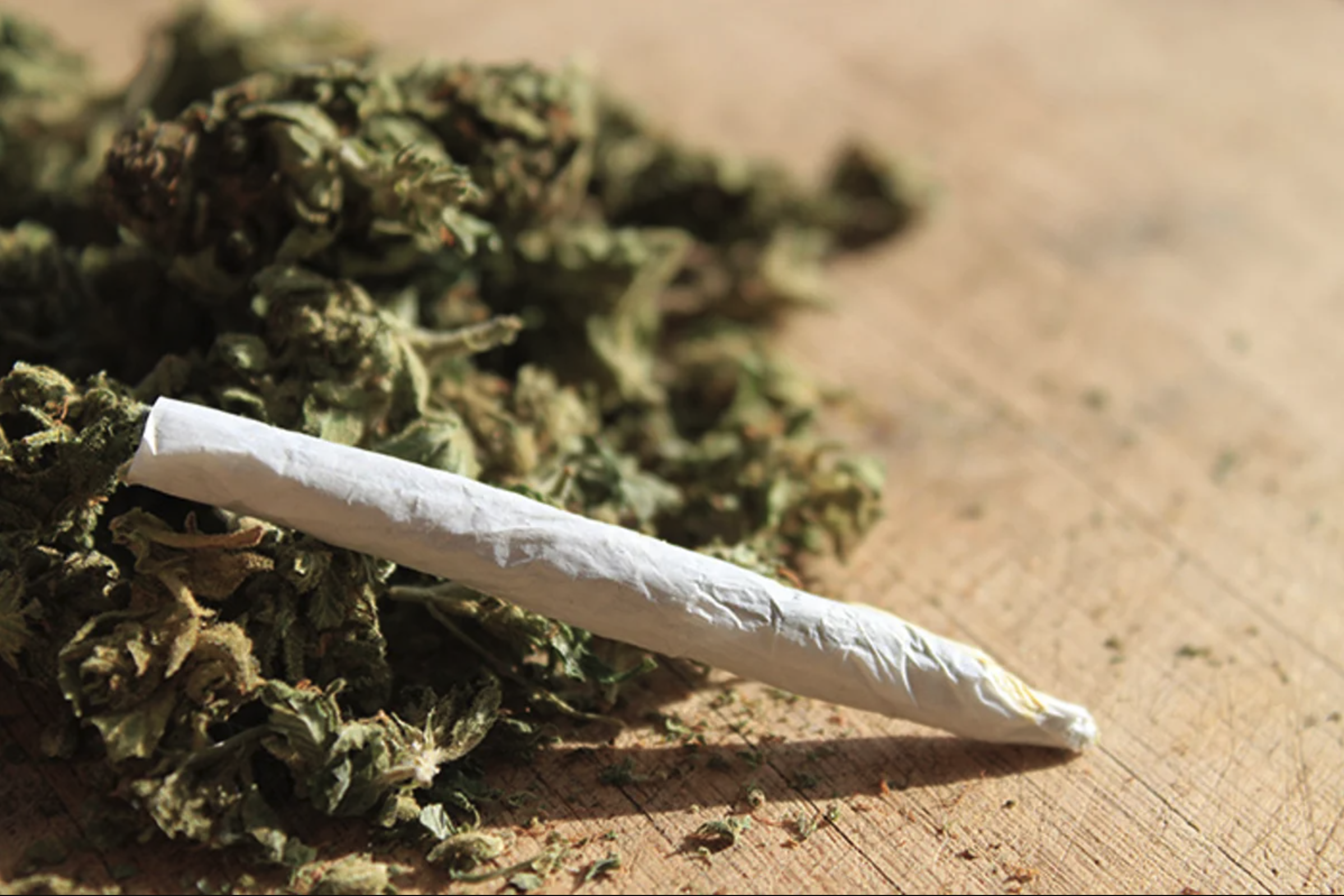
In 2026, marijuana prohibition in the United States is starting to look like one of the most pointless and destructive policies still on the books. Twenty-four states and D.C. have fully legalized adult-use cannabis. The federal government, under a Trump executive order signed in December 2025, is actively working to reschedule marijuana from Schedule I to Schedule III. Public support is at an all-time high (pun intended). And yet, people are still getting arrested, still catching felonies, and still having their lives wrecked over a plant that’s less dangerous than the beer you can grab at any gas station. It’s bullshit, and here’s why.
1. The War on Weed Is a War on Black and Brown People
We can’t sugarcoat this one. Marijuana prohibition has always been enforced along racial lines, and the data is damning. According to the ACLU, Black Americans are 3.64 times more likely than white Americans to be arrested for marijuana possession, despite both groups using the drug at roughly the same rates. In some counties, the disparity is absolutely insane. In Pickens County, Georgia, Black residents are arrested at a rate 97 times higher than white residents. Ninety-seven times. For the same damn thing.
This isn’t ancient history. These disparities persisted through 2018 and beyond, and in 31 states, racial disparities actually got worse between 2010 and 2018. In Washington, D.C., 89% of marijuana arrests between 2015 and 2019 were of Black individuals, even though Black people make up only 45% of the city’s population.
The consequences of an arrest go far beyond a night in jail. A marijuana conviction can cost you your job, your housing, your student financial aid, custody of your children, and even your immigration status. Legalization doesn’t magically fix racism in policing, but research published in ScienceDirect found that decriminalization was associated with a roughly 17% decrease in the racial disparity of arrest rates among adults. It’s not a silver bullet, but it’s a hell of a lot better than the status quo.
2. The Money Is Absolutely Ridiculous
If the moral argument doesn’t move you, maybe your wallet will. Legal cannabis is an absolute cash machine for state governments. According to a 2025 report from the Marijuana Policy Project, states have raked in a combined total of more than $24.7 billion in tax revenue from adult use cannabis sales since Colorado and Washington kicked things off in 2014. In 2024 alone, that number hit a record $4.4 billion in a single year.
California pulled in over $1 billion in cannabis tax revenue. Illinois brought in $578 million. Michigan collected $524 million. Washington added $516 million. Colorado’s regulated marijuana sales surpassed $1 billion in 2025, generating over $217 million in tax and fee revenue for the state.
And that money isn’t sitting around in some government slush fund. States are directing cannabis tax revenue toward Medicaid, education, school construction, housing, roads, early literacy, behavioral health programs, veterans’ services, and reinvestment in communities devastated by decades of drug war enforcement. In Arkansas, Governor Huckabee Sanders signed a law in 2025 using medical marijuana tax revenue to fund free school breakfasts for students. Weed is feeding kids.
Beyond taxes, the cannabis industry now supports over 440,000 full-time jobs across the country, and projections estimate the industry will hit $35.2 billion in total sales in 2025 alone. Meanwhile, states that refuse to legalize are just watching that money flow across their borders.
3. Prohibition Doesn’t Stop Anyone From Smoking Weed
Here’s the thing that should be painfully obvious to anyone paying attention: making marijuana illegal does not stop people from using marijuana. It never has. Over half of American adults have tried it at some point, and the CDC estimated 48.2 million users nationwide back in 2019. That number has only gone up.
All prohibition does is push the entire market underground, where there’s zero quality control, zero consumer protection, and zero tax revenue. People buy weed from unregulated sources that might be contaminated with pesticides, heavy metals, or synthetic additives. There’s no age verification, no labeling, and no recourse if something goes wrong.
Legalization and regulation bring the market into the light. Licensed dispensaries sell tested products with clear labeling. Consumers know what they’re getting. There are age restrictions (21 and older in every legalization state). And the tax revenue from those sales funds public services instead of lining the pockets of black market dealers.
As the Tax Foundation puts it, taxes on legal product should be low enough to undercut the illicit market, which reduces individual and societal harm while still generating revenue. In multiple states, cannabis tax revenue now exceeds what those states collect from either alcohol or tobacco. Prohibition isn’t protecting anyone. It’s just making sure that a massive industry operates with no rules and no accountability.
4. The Medical Evidence Is Real (Even If It’s Complicated)
Let’s talk about the science here, because the picture is more nuanced than either side likes to admit. A major 2025 JAMA review examining over 2,500 studies found that the clinical evidence for cannabis is strong for a handful of specific conditions but weaker than many people assume for broader claims about pain, anxiety, and insomnia.
What the science does solidly support: FDA-approved cannabinoid medications have clear benefits for chemotherapy-induced nausea and vomiting, appetite stimulation, and certain severe forms of epilepsy. A 2023 FDA review found scientific support for marijuana’s use in treating anorexia related to a medical condition, nausea and vomiting, and pain. A meta-analysis published in Frontiers in Oncology found a strong and growing scientific consensus around cannabis as both a palliative tool for cancer patients and a potential anticarcinogenic agent. And research continues to show promise for reducing opioid dependence, which is no small thing given that chronic pain affects nearly one in four American adults.
One of the biggest damn reasons the evidence base is incomplete is precisely because marijuana has been classified as Schedule I for decades, making rigorous research incredibly difficult. That’s the insanity of the current system. The government says there’s not enough evidence that weed has medical value, while simultaneously making it nearly impossible to study whether weed has medical value. Trump’s December 2025 executive order directing the rescheduling of marijuana to Schedule III explicitly acknowledges this problem and calls for dramatically expanding research. Legalization and rescheduling would blow the doors open for the kind of large-scale clinical trials we actually need to fully understand what cannabis can and can’t do.
5. It Doesn’t Make Crime Worse
One of the oldest scare tactics in the anti-legalization playbook is that legal weed will turn your neighborhood into a crime-ridden hellscape. The data says otherwise.
A comprehensive review compiled by NORML summarizes the peer reviewed literature: multiple studies have found no statistically significant long term effects of recreational cannabis laws on violent or property crime rates. In fact, some research shows the opposite. A study published in The Economic Journal found that medical marijuana legalization actually reduced violent crime, particularly in states bordering Mexico, by displacing illicit markets controlled by drug cartels. Research using micro-level data from Denver found that an additional dispensary in a neighborhood was associated with roughly a 19% decline in crime rates.
A 2018 study by Washington State University researchers found that police solved significantly more violent and property crimes after legalization in Colorado and Washington. The logic is straightforward: when cops aren’t wasting time and resources busting people for small amounts of weed, they can focus on crimes that actually matter. Research from Oregon also found that legalization was associated with increased clearance rates for violent crime and aggravated assault.
And then there’s the broader point: in the states that haven’t changed their marijuana laws, arrest rates and racial disparities actually increased over time. Doing nothing isn’t some neutral, safe option. It’s an active choice to keep funneling people into the criminal justice system for something that most of the country has decided shouldn’t be a crime.
The Bottom Line
The arguments against marijuana legalization are crumbling faster than a poorly rolled joint. The racial injustice of enforcement is undeniable. The economic benefits are massive and proven. Prohibition doesn’t actually prevent use. The medical potential is real and being actively suppressed by outdated scheduling. And the crime fears have been thoroughly debunked by over a decade of real world data.
Twenty four states have figured this out. The president has signed an executive order to reschedule. Thirty-nine states and D.C. have legalized recreational marijuana as of 2026. The dominoes are falling. It’s time for the rest of the country, and the federal government, to stop clinging to a failed experiment in prohibition and get on the right side of history. The war on weed was always a bad idea, and the only thing we should be debating now is how quickly we can undo the damage it’s caused.
Support Independent Commentary
If this resonated with you, consider supporting Get The Rant. No ads, no sponsors — just real talk funded by readers like you.
Support the Rant →